


Early Warning Signs of Atherosclerosis You Shouldn’t Ignore
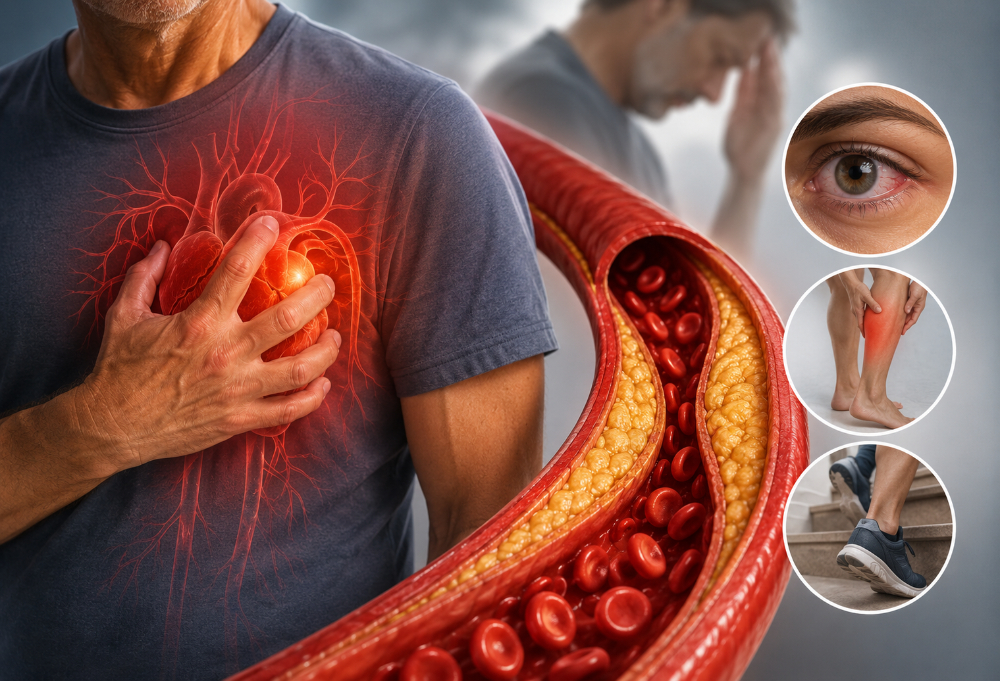
Atherosclerosis is one of the most common and dangerous cardiovascular conditions in the world, yet millions of people live with it for years without realizing anything is wrong. Often called the “silent killer,” this disease involves the gradual buildup of plaque inside the artery walls, narrowing the passageways that carry oxygen-rich blood to your heart, brain, and other vital organs. Understanding the early warning signs of atherosclerosis could be the difference between catching the condition in time and suffering a life-altering cardiac event.
If you have been noticing unusual changes in your body, learning to recognize the symptoms of clogged arteries is one of the most important steps you can take for your long-term health.
What Is Atherosclerosis and Why Does It Develop?
Atherosclerosis begins quietly. Over time, fatty deposits made up of cholesterol, calcium, and other cellular waste products accumulate along the inner walls of your arteries. These deposits harden into what doctors call plaque. As plaque builds up, it narrows the arteries, restricts blood flow, and makes it harder for your cardiovascular system to do its job. In some cases, plaque can rupture, triggering a blood clot that completely blocks an artery and causes a heart attack or stroke.
The condition tends to develop slowly over decades, which is why it often goes undetected until a serious complication occurs. Risk factors include high blood pressure, high cholesterol, smoking, diabetes, obesity, a sedentary lifestyle, and a family history of heart disease. Age also plays a role, with the risk increasing significantly for men over 45 and women over 55. While you cannot change your genetics or your age, recognizing artery blockage symptoms early gives you the best chance to slow or reverse the disease’s progression through lifestyle changes and medical intervention.
Chest Pain and Shortness of Breath
One of the most recognized early warning signs of atherosclerosis is chest pain, medically known as angina. This discomfort occurs when the heart muscle does not receive enough oxygen-rich blood due to narrowed coronary arteries. Angina often feels like pressure, tightness, squeezing, or a burning sensation in the chest. It may also radiate to the shoulders, arms, neck, jaw, or back.
Many people make the mistake of dismissing angina as indigestion or muscle tension, especially when the discomfort is mild or comes and goes. However, recurring chest pain or pressure, particularly during physical exertion or emotional stress, should never be ignored. It is one of the clearest symptoms of clogged arteries affecting the heart.
Shortness of breath frequently accompanies chest discomfort and can also appear on its own as an early indicator of cardiovascular trouble. When the heart struggles to pump blood efficiently because of reduced arterial flow, fluid can back up into the lungs, making it harder to breathe. If you find yourself becoming winded during activities that never used to challenge you, or if you wake up at night feeling breathless, these are signs worth discussing with a doctor as soon as possible.
Poor Circulation Signs in the Legs and Feet
Atherosclerosis does not only affect the arteries around the heart. When plaque accumulates in the peripheral arteries (those supplying blood to the legs, feet, and arms), it causes a condition known as peripheral artery disease (PAD). The poor circulation signs associated with PAD are often subtle at first, but they become increasingly disruptive over time.
Leg pain or cramping during walking or climbing stairs is one of the hallmark symptoms. This is called claudication, and it occurs because the leg muscles are not receiving enough blood to meet their demands during activity. The pain typically eases with rest but returns once you start moving again. Some people describe it as a heaviness, aching, or fatigue in the calves, thighs, or hips.
Other poor circulation signs include cold or numb feet, a noticeable change in skin color on the legs or feet (such as pale, bluish, or reddish discoloration), slow-healing sores or wounds on the lower extremities, and weak or absent pulses in the feet. Hair loss on the legs and a shiny appearance to the skin can also indicate inadequate blood flow. If you notice any combination of these symptoms, it is important to bring them to your healthcare provider’s attention, as untreated PAD significantly raises the risk of limb-threatening complications.
Neurological Symptoms and Carotid Artery Disease
When atherosclerosis affects the carotid arteries (the large vessels on either side of the neck that supply blood to the brain), it can produce a range of neurological warning signs. These symptoms of clogged arteries in the neck and brain are often the prelude to a full stroke, which is why they demand immediate attention.
A transient ischemic attack (TIA), sometimes called a “mini-stroke,” is one of the most serious early warning signs. During a TIA, blood flow to part of the brain is temporarily interrupted, causing symptoms that typically last only a few minutes to a few hours. These include sudden weakness or numbness on one side of the face, arm, or leg; trouble speaking or understanding speech; vision problems in one or both eyes; dizziness; and loss of balance or coordination.
Many people who experience a TIA dismiss it because the symptoms resolve on their own. This is a dangerous mistake. A TIA is a medical emergency and a powerful predictor of a future, potentially debilitating stroke. In addition to TIA symptoms, people with carotid artery disease may notice persistent headaches, cognitive fog, difficulty concentrating, or unexplained changes in memory. These subtler artery blockage symptoms deserve investigation, particularly in people who already have known cardiovascular risk factors.
Fatigue, Erectile Dysfunction, and Other Lesser-Known Warning Signs
Not all early signs of atherosclerosis are dramatic or immediately alarming. In fact, some of the most telling early indicators are easy to overlook because they seem unrelated to heart health. Persistent, unexplained fatigue is one of them. When circulation is compromised throughout the body, organs and tissues receive less oxygen than they need to function optimally. This can leave you feeling chronically tired, sluggish, or mentally foggy even after adequate rest.
Erectile dysfunction (ED) in men is another early warning sign that often gets overlooked in conversations about cardiovascular health. The arteries supplying blood to the penis are among the smallest in the body, and they tend to show signs of atherosclerosis before larger vessels become significantly affected. Studies have found a strong link between ED and cardiovascular disease, making it one of the more sensitive early indicators available to men. If you are experiencing ED, especially at a relatively young age and without an obvious psychological cause, discussing your cardiovascular risk with a doctor is a prudent step.
Other lesser-known poor circulation signs include cold hands and feet, frequent leg cramps at night, slow-growing toenails, and a feeling of general weakness that worsens with activity. In women, atherosclerosis symptoms can sometimes present differently than in men, with more emphasis on fatigue, nausea, upper back pain, and jaw pain rather than classic chest pressure. This is one reason cardiovascular disease in women is often underdiagnosed.
Kidney arteries can also be affected by plaque buildup, leading to reduced kidney function. Symptoms may include high blood pressure that is difficult to control, swelling in the legs or ankles, and changes in urine output. Recognizing these artery blockage symptoms as part of a broader cardiovascular picture can lead to earlier diagnosis and more effective management.
Conclusion
Atherosclerosis is a progressive condition, but it is not inevitable. Recognizing the early warning signs, from chest pain and shortness of breath to poor circulation signs in the legs and subtle neurological changes, gives you the power to act before a crisis occurs. Whether you are concerned about symptoms of clogged arteries, peripheral artery disease, or carotid artery disease, the most important step is the same: talk to your doctor. Early detection, lifestyle changes, and the right medical treatment can significantly slow the disease’s progression and help you live a longer, healthier life.
Connecting The Dots Between Heart & Sleep
Dr. Atif Sohail is a board-certified cardiologist, of Heart & Sleep Clinics of America has been providing comprehensive and state-of-the-art services, including testing and treatment of cardiovascular disease and disorders, in Arlington and nearby cities for over 11 years. Dr. Sohail founded his own cardiology practice shortly after completing cardiology training abroad, as well as in the United States in 2001. After 5 years of practicing in Oklahoma, he relocated to Arlington, Texas where he remains. His services for the Arlington, Ft. Worth and Dallas communities include: a state-of-the-art outpatient clinic, in-patient management, emergency care, supervision and training of rotating students seeking a career in medicine. Give us a call today to learn more about what we can do for you.